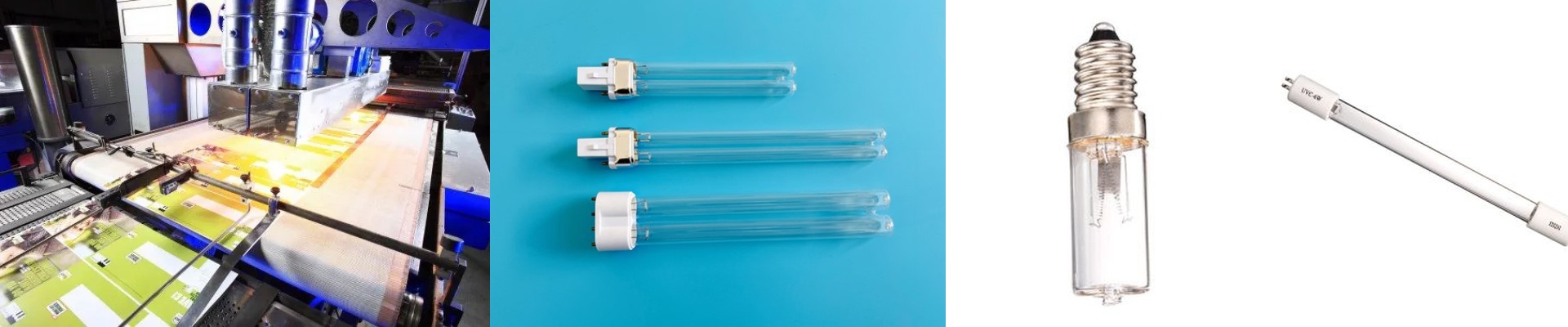
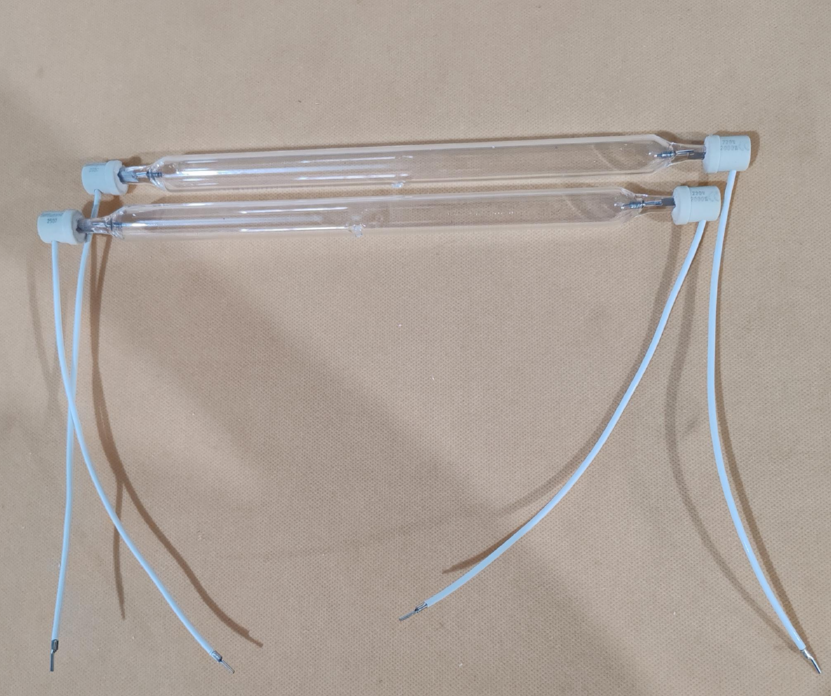
After walking through around 3,000 printing plants—offset, flexo, and screen lines all running hard—one thing is clear: when a job fails cure, it’s almost never the ink label you blame. It’s mismatched spectral output, irradiance that drifts, and lamps that wander out of tolerance before the run is done. We built our medium-pressure mercury vapor UV lamps around that reality.
What matters under the hood
Medium-pressure mercury vapor gives you dense, broadband UV that stays predictable along the arc. We lean hard on strong emission around 365 nm, and keep usable output across the near-UV band, so photoinitiators in thick ink films and pigmented formulations actually get the photons they need. Peak irradiance is what lands on the substrate, not what reads in free space. Our reflector geometry and dichroic coatings shape the envelope so the dose stays consistent. Output holds steady for thousands of hours, and the lamp life curve shows a manageable depreciation slope—so you plan maintenance, instead of chasing it mid-shift.
Why this plays in industrial printing
On the floor, the cure has to keep up with the press: high-speed sheet runs, heavy ink laydowns, and substrates that run from coated paper to plastics and metal. With this lamp design, dwell drops, you don’t have to throttle line speed as much, and rejects from incomplete cross-linking fall off. Energy draw is matched to the process window, not cranked to the max, so you hit the required dose without dumping excess heat into the web. Less heat means fewer temperature-related web issues, more repeatable color, and uptime you can actually schedule around.
What you need to get right
These lamps are built for press-integrated UV curing, not open-air exposure. Keep cooling and reflector alignment in check, or you won’t hold the designed dose. Match the arc length and electrical interface to your curing module, and make sure your ink’s photoinitiator absorption lines up with the spectral profile. Set it up correctly, and the curing behaves like a real process parameter—measurable, repeatable, and ready for production.