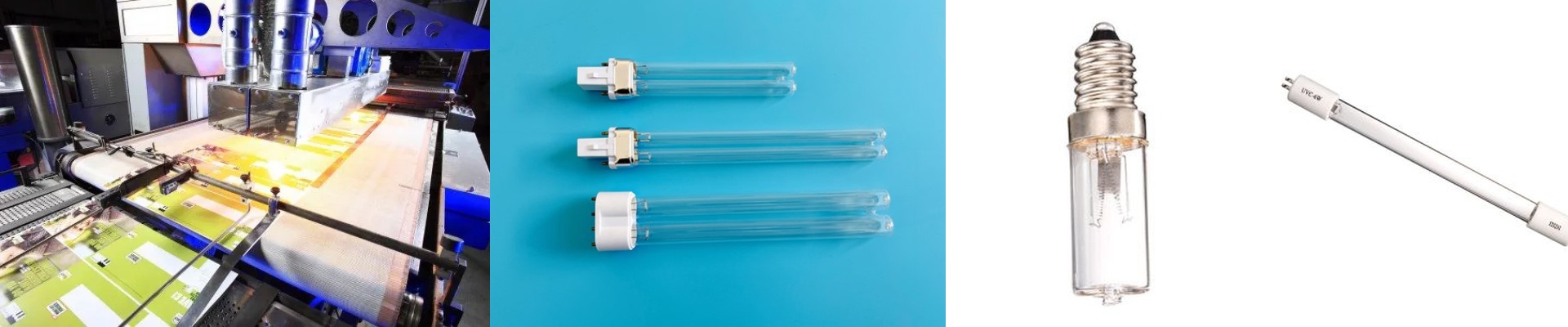
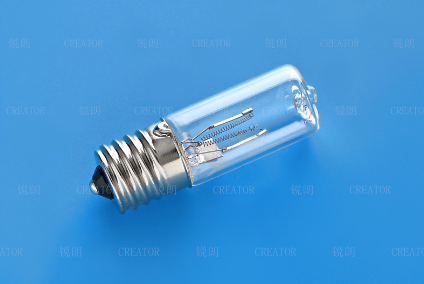
On the press, uneven drying isn’t just a headache—it’s yield bleeding away. When UV ink cures unevenly, you get mottle, adhesion failure, and whole runs that get scrapped. Often, the root is simple: the lamp output and the thermal/UV field across the substrate are out of sync. The fix comes down to spectral control, not just cranking up raw power. What matters under the hood Gallium-doped UV lamps push energy toward the longer wavelengths, with strong output around 365nm and 385nm and a usable shoulder toward 405nm. That profile lines up with the photoinitiators in many offset, flexo, and screen inks, so you get through-cure without the surface quenching that bites you later. Match that lamp with a dichroic reflector and a stable arc envelope, and you get repeatable peak irradiance and dose distribution across the web. Expect consistent output over thousands of starts, and verify it with a calibrated spectral radiometer—because curing is photochemistry, not guesswork. Why does this work on real presses? Because whether you’re running offset, flexo, screen, or gravure, the lamp has to fit the machine’s dwell and intensity window. Gallium lamps deliver the right spectral density for faster cross-linking at lower overall energy, which keeps heat off thin films and sensitive substrates. You end up with a more uniform cure, fewer rejects, and higher line speeds without chasing hot spots and cold edges. In practice, that means stable yield and makereadies you can count on. Here’s the part a lot of people miss: matching lamp spectral output to ink chemistry is only half the job. The other half is fitting the lamp into the press the way it was built. Reflector contour, lamp position, and cooling have to be aligned to the print process—offset, flexo, screen, and gravure each need different intensity profiles and thermal management. Arc length and connector interface tolerances are tight, so confirm compatibility with your curing module before you even pull the trigger on installation.